
Retail & late shifts
The last one closing up.
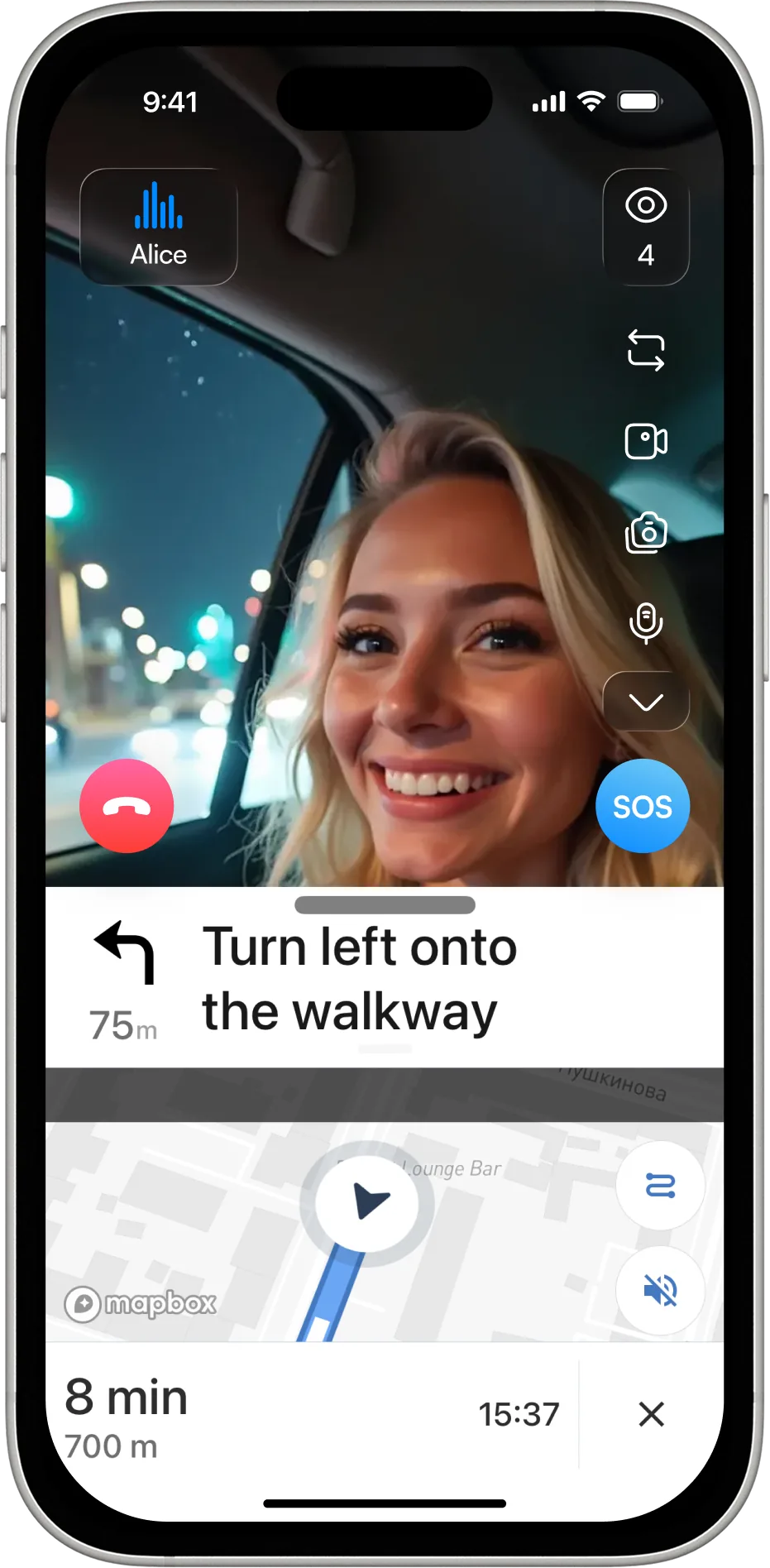
From the final customer to the walk to the car. Support for the moments a colleague is out of reach.
For companies Lone worker safety
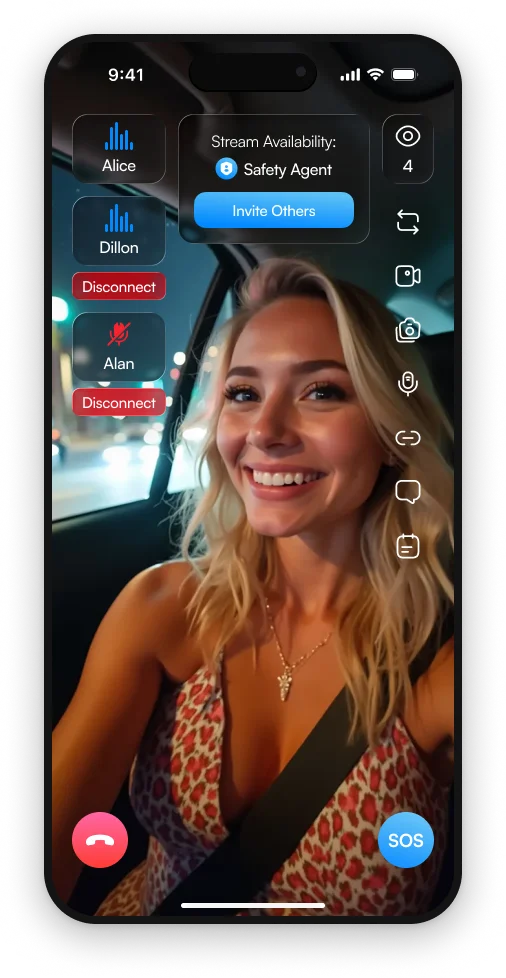
Give your team a direct connection to a Safety Agent. Live video, shared location and SOS for the moments they are working on their own.
01 / The connection
More context when it matters. A real person to help you take the next step.
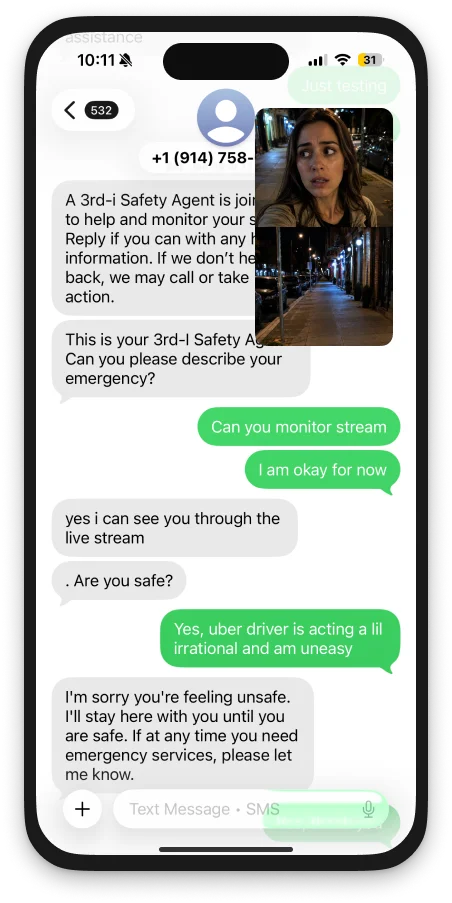
Start a live trip, choose who to share it with, and text a Safety Agent when something feels wrong.
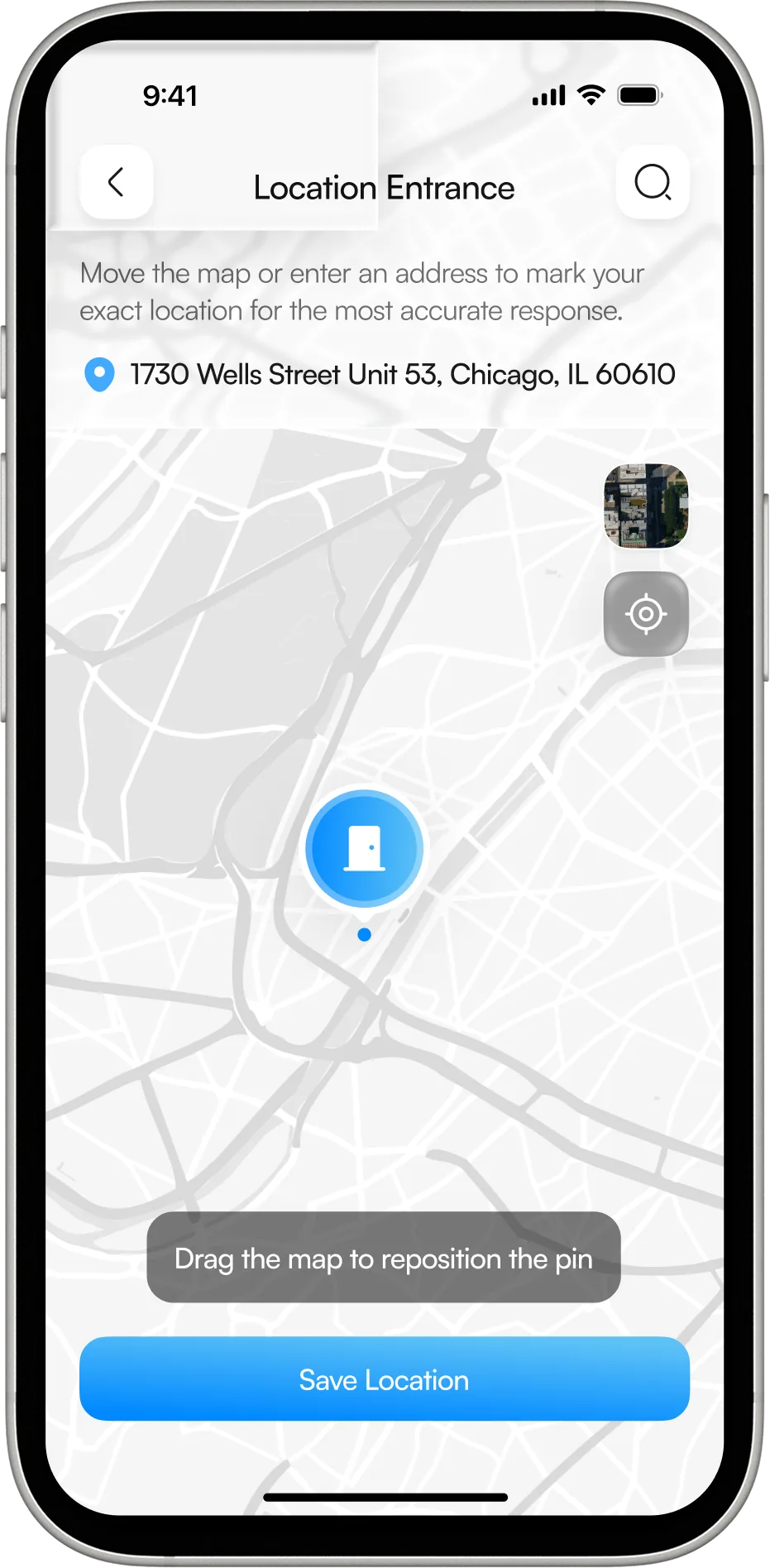
Video, audio and location give the connected agent context. A pinned entrance helps identify the right door.
SOS connects to a Safety Agent, with emergency escalation through RapidSOS. Your workplace plan guides the on-site response.
02 / Your team
A whole shift or a few minutes between people. Build support around the way your team actually works.
Retail & late shifts
From the final customer to the walk to the car. Support for the moments a colleague is out of reach.
Hotels & hospitality
Guest rooms, service corridors and quiet floors. A connection that can travel with your people.
Field teams & home visits
For visiting staff, property teams and technicians whose workplace changes with every appointment.
03 / New York employer guide
Two recent laws put access to help on the agenda for retail and hotel employers.
Sources reviewed September 9, 2026
NYS Labor Law § 27-e
Retail employees statewide
Policy & training required
Retail employees statewide
Silent response buttons from Jan. 1, 2027
The button must request immediate help from a security officer, manager or supervisor.
Training is required at hire, then annually for employers with 50 or more retail employees, or every two years for those with 10 to 49.
Phone-based buttons must be on employer-provided equipment. Wearable and phone-based buttons cannot track employee location except when triggered.
NYS Department of Labor: overview ↗NYS Department of Labor: training FAQ ↗Local Law 104 of 2024 · NYC Code § 20-565.6
Free panic buttons for core employees whose duties involve entering occupied guest rooms.
Law effectiveMay 3, 2025
This is a New York City requirement. The city notes an enforcement stay through May 17, 2025.
Review the required on-site assistance, location information and staff procedures alongside any technology.
NYC DCWP: law and effective date ↗04 / Before you roll out
Workers start their own trips and choose their sharing circle. Employers cannot start a trip for them or view their individual location between trips.
Do not assume they are interchangeable. The New York retail rule specifies assistance from a security officer, manager or supervisor; NYC hotel requirements address help on site. Confirm the required workflow, devices and privacy controls before selecting a system.
Yes. Start the conversation with the people, shifts and locations you need to cover. We can scope seats, devices and the response plan around that team. 3rd-i is available on iPhone today; confirm device coverage and connectivity before rollout.
Identify when people work alone, how they ask for help, who responds on each shift, and what happens if connectivity fails. Train the team and rehearse the response alongside your required policies and procedures.
Start with your people
Tell us who is working alone, where they go and when they need support. We’ll help you plan the coverage.