
Is Rideshare Safe and How to Make Every Ride Safer
You’re standing outside a restaurant after dark, watching the map on your phone while a rideshare vehicle turns onto the street. You check the license plate, match the driver’s photo, and get in. The trip looks routine, but a quieter question remains: is rideshare safe when you’re alone, tired, unfamiliar with the area, or unable to tell someone exactly what’s happening inside the car?
The balanced answer is that rideshare is generally low-risk on a per-trip basis, but it isn’t risk-free. Safety depends on the type of risk you’re considering, including collisions, unsafe driving, impersonation, harassment, assault, delayed emergency response, and the difficulty of proving what happened afterward.
A useful way to think about this is as layered risk control. The app provides identity details, route information, trip sharing, and emergency tools. Your habits add another layer. Live video, audio, location tracking, and human escalation can add further protection when a standard app feature leaves too much uncertainty.
The practical question isn’t only whether rideshare is safe in general. It’s whether your safeguards match the situation. A daytime trip on a familiar route may call for a simple verification routine. A late-night ride through an unfamiliar area, a solo trip after a shift, or a journey coordinated for a student or family member may justify live oversight.
Table of Contents
- How Safe Is Rideshare by the Numbers
- The Two Kinds of Risk You Should Understand
- What Rideshare Apps Already Do to Protect You
- Practical Safety Practices for Every Ride
- How Live Monitoring Closes the Remaining Safety Gaps
- Making Your Decision and Staying Safer Going Forward
How Safe Is Rideshare by the Numbers
The strongest starting point is to separate per-trip risk from total event volume. Uber’s 2021 to 2022 U.S. Safety Report said that more than 99.9% of roughly 1.8 billion trips were completed without a safety report, while its reported rate of critical safety incidents was about 0.0002% of trips. Lyft’s 2024 Safety Transparency Report used similar framing, reporting serious safety incidents in 0.0002% of rides across roughly 1.41 billion rides from 2020 to 2022. These figures are summarized with source context in this rideshare safety policy overview.
In plain language, the overwhelming majority of rides finish without a serious incident. That matters because fear can make rare headlines feel representative of every journey. They aren’t. A rider’s ordinary experience is much more likely to be an uneventful trip from one verified location to another.
At the same time, a very small percentage applied to billions of rides can still produce a substantial number of reports. That isn’t a contradiction. It’s a scale effect. A tiny leak in a very large water system may affect only a small share of the total flow, yet still release a meaningful amount of water.
Why rare events still deserve attention
The platform figures describe broad trip outcomes. They don’t tell you that every route, pickup area, driver, time of day, or passenger situation carries identical exposure. They also don’t eliminate the need for prevention, reporting, or evidence preservation after an incident.
The U.S. Government Accountability Office reported that there’s no federal requirement to collect assault data for ridesourcing or taxi trips. It also reported that the three largest ridesourcing companies publicly reported about 4,600 of the most serious sexual-assault-related incidents in 2019, along with 19 fatal injuries or illnesses related to assaults in the ridesourcing and taxi industries that year. The report’s central practical lesson is that national data remains incomplete, so platform percentages shouldn’t be treated as a complete account of every event. See the GAO report on rideshare and taxi safety data for that reporting context.
For riders, the calibrated conclusion is straightforward:
- Most trips are completed safely, based on the transparency figures above.
- A low percentage doesn’t mean zero risk, especially when the total number of rides is enormous.
- Aggregate safety doesn’t predict a specific ride, because local traffic, driver condition, time, and passenger vulnerability vary.
- Evidence matters, because location history alone may not show what happened inside the vehicle.
If a collision causes a serious back injury, preserving trip details and seeking appropriate guidance can help clarify the next steps. A resource on back injury car accident compensation explains why injury documentation and incident details can matter after a crash.
The Two Kinds of Risk You Should Understand
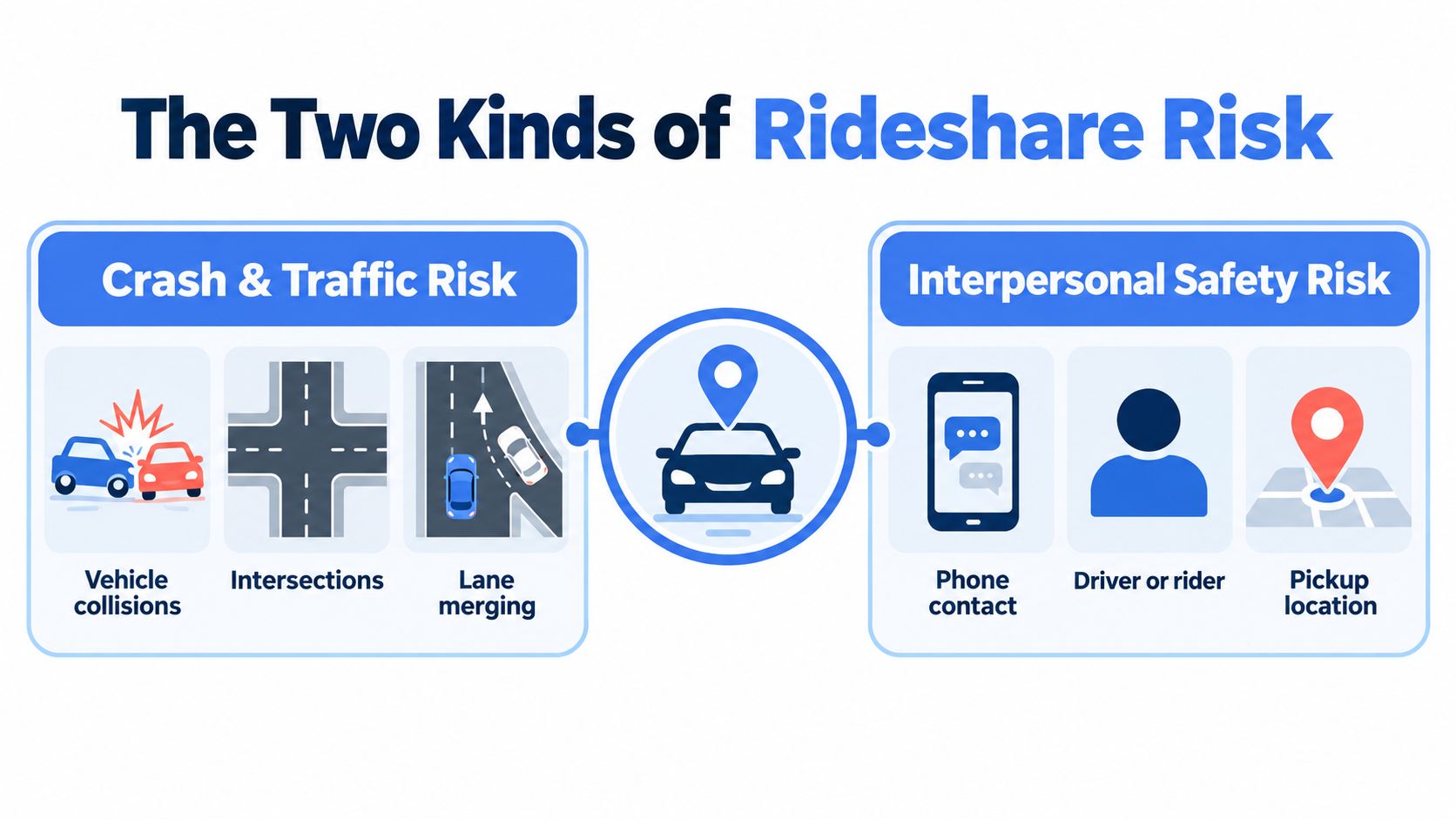
“Is rideshare safe?” becomes easier to answer when you ask a more precise question: safe from what? The main categories are crash and traffic risk and interpersonal safety risk. They can occur in the same journey, but they arise through different mechanisms and require different controls.
Crash risk is shaped by movement through the road network. A large case-control study found that each additional 100 rideshare trips originating within a taxi-zone hour was associated with a 4.6% increase in the odds of any injury crash, with the strongest effects at trip nodes such as pickup and drop-off points. The study is available in this peer-reviewed rideshare crash analysis.
That finding doesn’t mean your individual trip automatically becomes dangerous when a busy pickup area has more rides. It shows why dense curbside activity can create more conflict points. Vehicles stop suddenly, drivers merge into traffic, passengers cross near moving cars, and pedestrians gather around the same limited space. Late-night travel can add poor visibility, tired drivers, impaired road users, and hurried pickups to that environment.
Driver conditions are part of the safety equation
Passenger safety pages often focus on identifying the vehicle and sharing the route. Those steps matter, but they don’t address every crash pathway. Driver fatigue, cellphone use, and unfamiliar roads can affect how a vehicle is operated.
A 2026 University of Illinois Chicago summary of new research reported that one-third of surveyed ride-share drivers had been in a crash while working, with cellphone use, driving while tired, and unfamiliar roads identified as the strongest risk factors. The same summary cautions that broader crash research remains observational and low-certainty, so it’s better to treat these findings as an important risk signal than as a precise prediction for any individual driver. Read the UIC rideshare crash research summary for the stated context.
Interpersonal risk works differently. It includes unwanted contact, harassment, impersonation, assault, and situations where a passenger or driver becomes isolated from outside help. Available reporting is incomplete, which makes prevention and evidence capture especially important.
A practical risk-based monitoring approach treats these hazards as different signals rather than one general feeling of danger. Route deviation may matter in one situation. Sudden stopping, unsafe driving, or a passenger’s inability to respond may matter in another.
For readers dealing with a collision, a step-by-step Uber crash guide can help explain the practical information to preserve and the questions that may arise after a rideshare accident.
The key distinction is simple. Crash controls help you manage movement and traffic exposure. Interpersonal controls help you manage isolation, uncertainty, and response. Treating both as the same problem leads to incomplete precautions.
What Rideshare Apps Already Do to Protect You
Rideshare apps already provide several useful safeguards, and most riders should use them on every trip. Their main purpose is to reduce uncertainty before and during the ride.
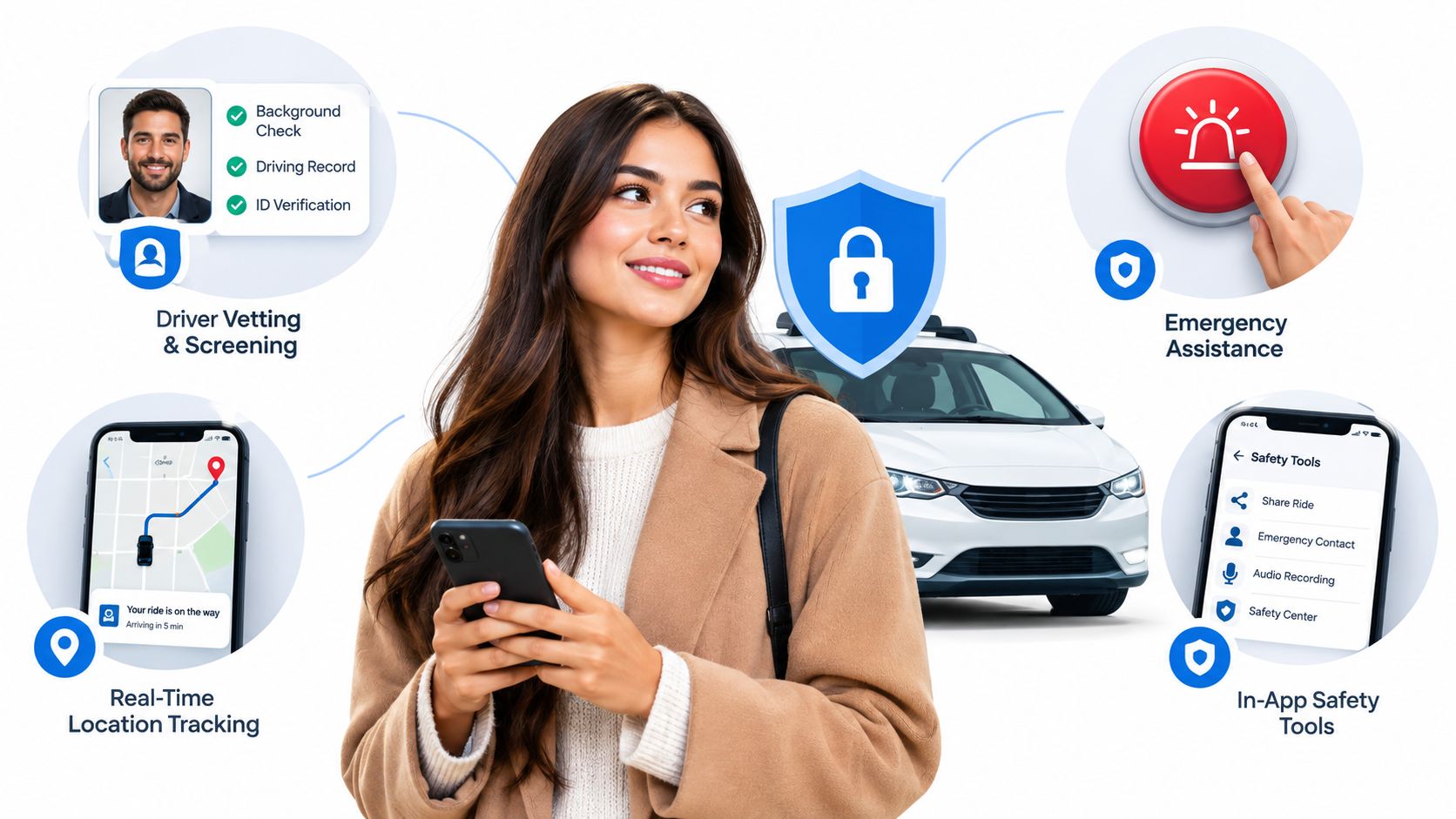
A typical app gives you the driver’s name, photograph, vehicle description, license plate, pickup point, destination, and route. That information lets you confirm that the car approaching you is the one you requested. Many platforms also support identity or vehicle verification processes, background screening requirements, trip sharing, emergency buttons, and in-app reporting.
What each feature actually solves
| App safeguard | What it helps you confirm or do | What it may not provide |
|---|---|---|
| Driver and vehicle details | Match the person, car, and plate before entry | Protection if you skip the verification |
| Route display | Notice major deviations or unexpected stops | A view of what’s happening inside the vehicle |
| Trip sharing | Give a trusted person access to trip information | Continuous human attention to the stream |
| Emergency button | Start an urgent response through the app | A complete record of the conversation or event |
| In-app reporting | Notify the platform after a concern | Immediate intervention in every situation |
These tools are valuable because they create a shared digital record. A trusted contact may see that you entered a particular vehicle and that the journey is progressing toward the destination. An emergency function may make it easier to request assistance than searching for a phone number.
The practical limit: Native app tools reduce ambiguity, but they usually don’t mean a trained person is continuously watching live video and audio from inside the vehicle.
That distinction matters during harassment or a rapidly changing emergency. A route can show where the car is, but not whether the driver is threatening the passenger. A check-in can show that someone responded, but not whether they were able to communicate freely. A trip receipt can confirm the ride occurred, but it may not preserve the full context of an incident.
The right approach isn’t to dismiss standard app features. Use them as the identity and route layer, then add habits or live oversight when the circumstances call for more direct visibility.
Practical Safety Practices for Every Ride
A short routine can make a rideshare trip easier to verify without turning the journey into a stressful procedure. Use the same sequence before, during, and after the ride so it still works when you’re tired or distracted.
Before you enter
Start with the vehicle, not the person waving from the curb. Check the license plate, vehicle make, driver photograph, and driver name in the app. Ask the driver who they’re picking up rather than volunteering your name first, and don’t enter if the details don’t match.
Choose a pickup point with lighting, nearby people, and enough space to stand away from moving traffic. If the driver asks you to cancel the app ride and pay privately, treat that as a reason to decline and request another vehicle.
Share the trip with someone you trust, especially when traveling alone. A simple message such as “I’m getting into the car now” gives the other person a clear starting point.
During the journey
Sit in the back seat when that’s practical. It gives you more personal space and makes it easier to exit on either side if the vehicle stops in a safe location.
Follow the route on your own phone map without repeatedly texting. If the route changes, ask a calm, direct question. A legitimate detour may have an ordinary explanation, such as a closure or navigation error, but you don’t need to ignore a pattern that makes you uncomfortable.
After dark, keeping the interior light on when appropriate can make the vehicle feel less isolated and may improve visibility. A 2025 review of taxi and ride-hailing safety identified measures including video and audio recording, emergency alerts, real-time tracking, verification systems, interior lighting during dark hours, and visible surveillance signage among potential mitigation strategies. The evidence is discussed in this review of taxi and ride-hailing safety interventions.
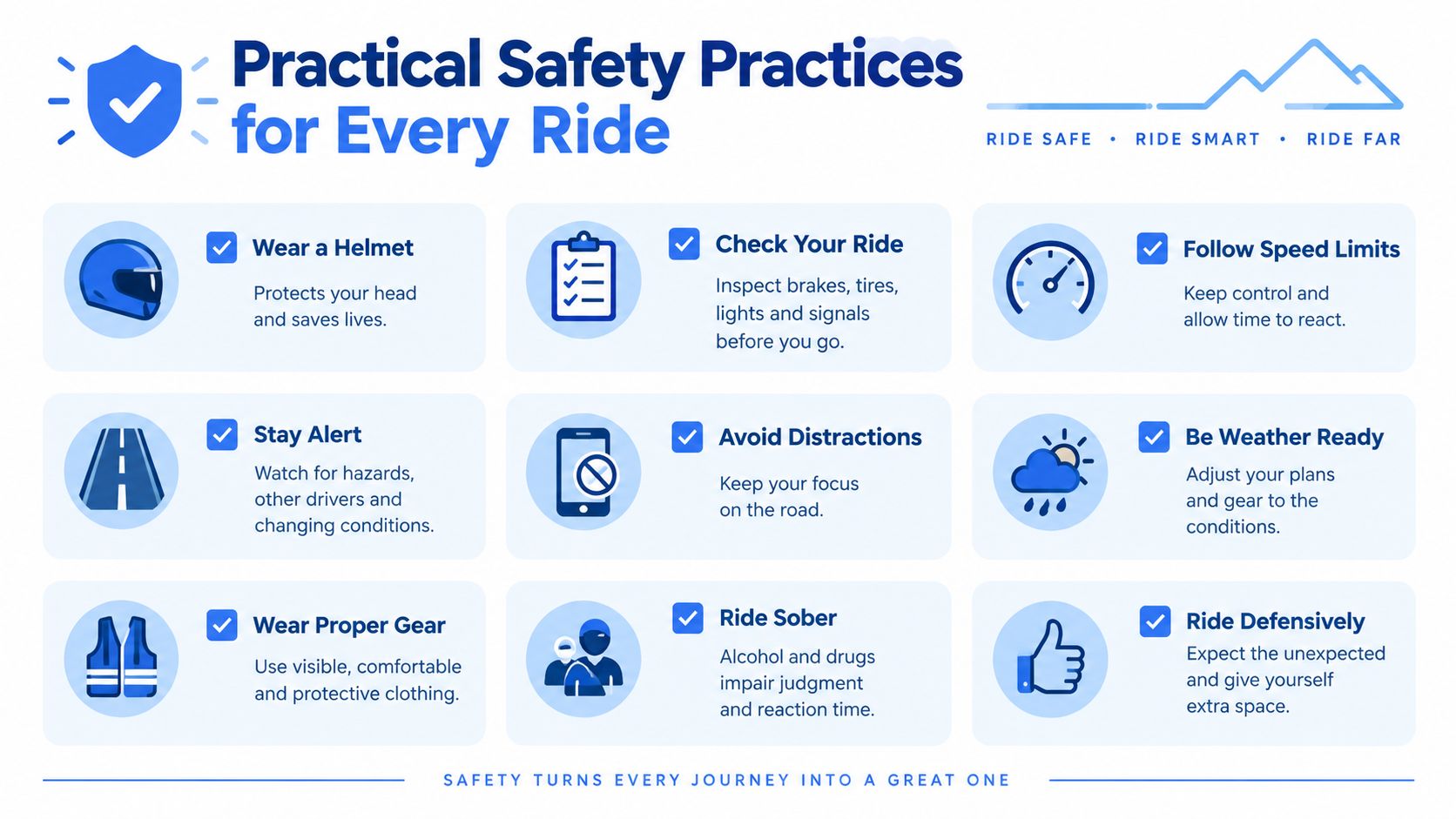
Use one-tap check-ins when available instead of typing while the vehicle is moving. If you feel immediate danger, use the app’s emergency function or call emergency services. You can find more ideas in these rideshare safety tips.
After you arrive
Confirm that you’ve reached the intended destination before ending the trip. Move into a visible, populated place rather than lingering beside the vehicle, and let your contact know you’re inside or safely at the next location.
Keep the trip receipt, route details, driver information, and relevant messages if something went wrong. Those records may help the platform, emergency responders, an insurer, or a lawyer understand the sequence later.
How Live Monitoring Closes the Remaining Safety Gaps
Standard app features answer important questions, but they can leave a gap between knowing where a vehicle is and knowing what’s happening inside it. Live monitoring closes that gap by combining route, audio, video, and human attention.
Consider a rider whose driver takes an unexpected turn. Location tracking may show the detour, but it can’t show whether the rider is calmly asking for clarification, whether the driver is behaving aggressively, or whether the rider has stopped responding. Live video and audio provide context, while a trained person can decide whether the situation needs a call, a check-in, or emergency escalation.
A layered monitoring model
3rd-i’s real-time safety monitoring provides an example of this human-in-the-loop model. Its mobile app can stream video, audio, and route information to selected contacts and trained Safety Agents. Squad viewing places the live route and video together, with a visible watcher count, so the rider knows the stream is being observed.
One-tap Nudges such as “You good?” and “Home yet?” reduce the need for distracting messages. If the rider uses SOS, a Safety Agent can review the available context and escalate to 911 through RapidSOS. Emergency for a Friend is designed for situations where someone else may need help and can’t coordinate the response alone.
The system also includes dual-camera streaming, Picture-in-Picture, lock-screen access, movement prompts, and Critical Alerts that can reach contacts through Do Not Disturb. Automatic recording, transcription, and summaries can preserve information for later follow-up, which addresses a weakness of relying on location history alone.
Privacy still matters. Ghost mode can temporarily remove the user from the map, while an Emergency Entry Pin can help responders identify the closest entrance. These controls let a user choose when visibility is shared and how emergency access information is handled.
Live monitoring isn’t a replacement for calling emergency services. It’s an added layer that can reduce isolation, improve context, and support faster escalation when a standard rideshare interface can’t show enough.
Making Your Decision and Staying Safer Going Forward
The answer to is rideshare safe depends on the situation, not just the brand or the average trip outcome. Begin with the basic layer every time: verify the vehicle, use the in-app route, share the trip, choose a visible pickup location, and preserve the receipt if something feels wrong.
For a familiar daytime journey, those steps may be enough. Consider adding live video, audio, route sharing, and human escalation when you’re traveling alone late at night, entering an unfamiliar area, coordinating a ride for a student, leaving a shift as a lone worker, or supporting a family member who may not be able to check in reliably.
The decision can be made quickly:
- Solo riders: Use native app checks, then add live oversight for trips where isolation or uncertainty is higher.
- Parents and families: Watch the route together and agree in advance on what a missed response means.
- Students: Combine campus procedures, verified pickups, and a trusted watcher for late travel.
- Employers: Set clear monitoring expectations for workers traveling alone or finishing night shifts.
Safety doesn’t require assuming every driver is dangerous or every ride will go wrong. It requires matching the level of observation and response to the circumstances. The more uncertainty a trip contains, the more useful it becomes to have someone who can see the context, contact the rider, and escalate when needed.
3rd-i offers live streaming of video, audio, and location to selected contacts and trained Safety Agents, along with one-tap check-ins, SOS support, recording, and emergency escalation through RapidSOS. Visit 3rd-i to see how live monitoring can add a practical safety layer to your next rideshare trip.