
Tile vs AirTag: Which Tracker Wins in 2026
A 2025 independent study found that, in populated areas, AirTag relayed its location within one hour about 98% of the time, while Tile averaged roughly 25% to 33% detection across the tested radii (arXiv study). That result reframes the usual Tile vs AirTag debate. The decisive question isn’t only whether your phone supports the tracker. It’s whether another participating phone is likely to encounter your lost item.
A tracker can save a suitcase, keyring, or backpack from becoming permanently lost, but neither product is a live safety system. The right choice depends on network density, operating-system compatibility, close-range accuracy, privacy protections, battery maintenance, and the environment where the item will disappear.
Table of Contents
- Why Tile and AirTag Still Get Compared in 2026
- What Each Tracker Is and Who It Serves
- Network Reach and Detection Performance Compared
- Accuracy, Hardware Features, and Battery Behavior
- Ecosystem Compatibility and Privacy Protections
- Real-World Use Cases That Decide the Winner
- Where Trackers Stop and Personal Safety Begins
- Recommendation and Common Questions
Why Tile and AirTag Still Get Compared in 2026
A bag disappears from an airport carousel. Keys vanish between the front door and a waiting rideshare. A tracker can turn the first reaction, “Where was it last seen?” into a practical search area. But that experience changes sharply depending on whether the item is sitting under a sofa, moving through a crowded terminal, or left on a rural roadside.
Tile and AirTag look similar because both attach to belongings and use Bluetooth rather than GPS or cellular connectivity. Their recovery systems are different, though. AirTag reports through Apple’s Find My network, while Tile depends primarily on people using the Tile app or compatible Tile hardware. That distinction matters more than a packaging claim about Bluetooth range.
The comparison that matters
A useful evaluation asks five questions:
- Who can participate in the finding network? AirTag can use nearby Apple devices, while Tile’s broader platform reach comes with heavier dependence on app participation.
- Who can set up and locate the tracker? Tile supports iOS and Android. AirTag’s setup and core tracking experience are designed around Apple devices.
- How precise is the final search? AirTag can use Ultra Wideband Precision Finding with compatible iPhones. Tile’s experience is primarily Bluetooth-based.
- What happens in a sparse environment? Neither tracker provides continuous GPS, so both can struggle when few participating devices pass nearby.
- Is the device protecting property or a person? It can help recover a tagged object. It doesn’t provide live video, audio monitoring, human oversight, or emergency escalation.
Practical rule: Choose based on the places your belongings travel, not only on the phone in your hand.
This guide weighs independent detection testing alongside hardware and privacy evidence. It treats ecosystem size as a potential advantage, not a guarantee, because actual recovery still depends on Bluetooth proximity, nearby-device participation, interference, and whether the object passes through populated areas. The result is a situational answer rather than a universal winner.
What Each Tracker Is and Who It Serves
Tile established the dedicated Bluetooth-tracker category several years before Apple entered it. AirTag reached consumers on April 30, 2021, with a listed price of $29 for one unit and $99 for a four-pack (MacRumors). Analyst Ming-Chi Kuo estimated approximately 20 million AirTag shipments in 2021 and projected about 35 million in 2022, which implies roughly 55 million cumulative shipments across those first two years, although those figures are estimates rather than Apple-reported sales.
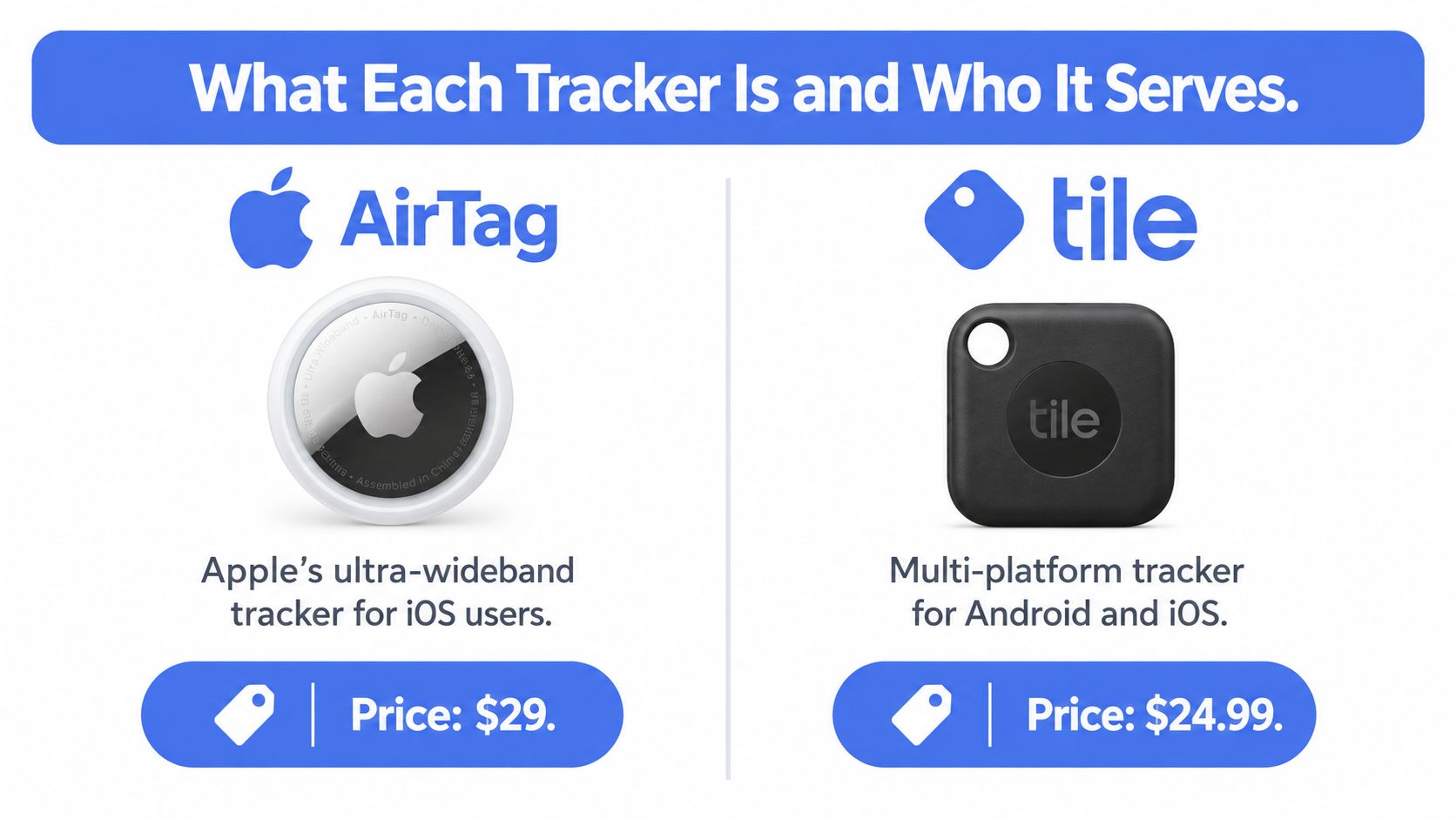
That launch changed the category’s position in the consumer market. Tile had already built experience around a separate tracker network and cross-platform support. AirTag brought tracker-style recovery into Apple’s existing Find My ecosystem, combining a low entry price with access to a much larger potential population of participating devices.
Tile’s strategic role
Tile remains the more flexible option for households and organizations that use both iOS and Android. Its product range also includes different form factors, which can make it easier to tag wallets, luggage, keys, or objects where a single round design isn’t convenient. The trade-off is that a lost Tile’s remote recovery depends more directly on whether nearby people have the relevant app or participate through the Tile ecosystem.
AirTag’s strategic role
AirTag is designed for Apple users who want close integration with Find My and supported iPhone hardware. Its appeal isn’t merely setup convenience. Apple’s ecosystem gives it a large potential detection population, especially in places where Apple devices are common. Buyers should still distinguish shipments from active installed trackers, because a shipped product may be replaced, inactive, lost, or outside network range.
The strategic choice is therefore clear. Tile prioritizes operating-system neutrality and product variety. AirTag prioritizes network density and Apple integration. A mixed-device household may value the first. An iPhone-heavy organization recovering luggage in airports may value the second.
Network Reach and Detection Performance Compared
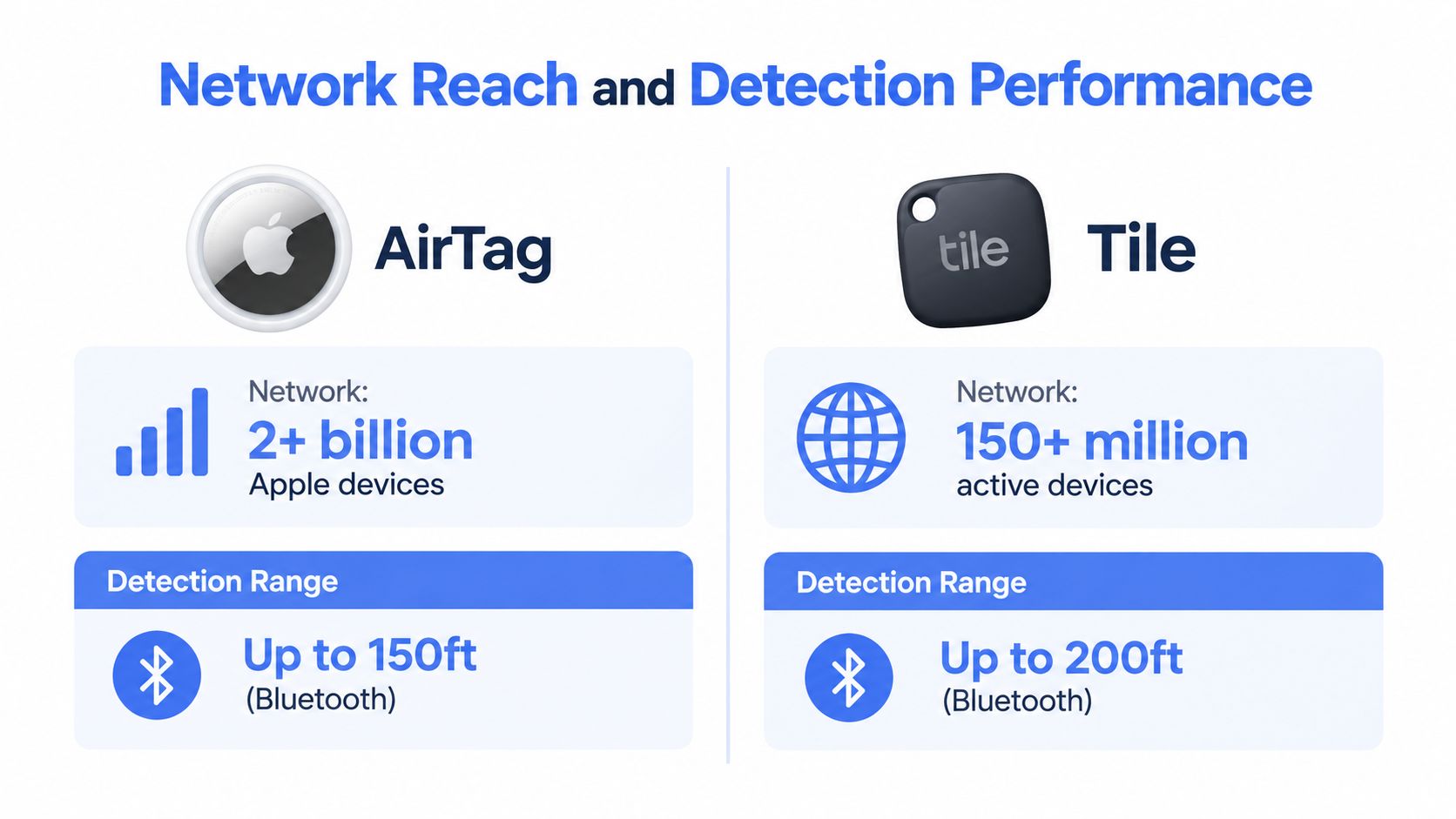
The recovery gap appears after an item leaves its owner’s Bluetooth range. AirTag can use nearby Apple devices to relay an encrypted location update through Find My, even when those device owners are not searching. Tile relies more heavily on people using the Tile app or carrying Tile hardware.
| Criteria | Tile | Apple AirTag |
|---|---|---|
| Finding network | Primarily Tile app and Tile hardware participation | Apple Find My network |
| Platform reach | iOS and Android | Apple ecosystem |
| Publicly cited ecosystem indicator | More than 50 million associated users | More than 1 billion people globally use capable Apple devices |
| Close-range method | Primarily Bluetooth | Bluetooth plus U1 Ultra Wideband on compatible iPhones |
| Structural advantage | Cross-platform compatibility | Potentially denser detection coverage |
These ecosystem figures describe potential reach, not guaranteed recovery. Popular Mechanics’ comparison associates Tile with more than 50 million users, while more than 1 billion people globally use Apple devices capable of contributing to Find My. A large installed base cannot relay a signal from an empty road, an underground location, or a bag beyond nearby devices.
Independent testing changes the verdict
The 2025 academic evaluation found a much higher AirTag detection rate in populated test areas, while Tile’s average detection was substantially lower across the tested radii (arXiv research). Its AirTag measurements also placed Bluetooth range at roughly 10 to 30 meters. The practical conclusion is about network behavior, not just advertised radio range: AirTag has stronger evidence for unattended recovery where Apple devices are common.
Tile still fits a different recovery pattern. In a mixed iOS and Android household, cross-platform access may matter more than maximum passive coverage. It can also work well when the owner is nearby and actively searching with the app. In a transit hub, AirTag benefits from a denser pool of potential relays. In rural areas, neither product can create coverage where passing phones are scarce.
The distinction matters because tracker recovery is not live safety monitoring. A delayed location update can help recover luggage or keys, but it cannot provide continuous personal tracking or guarantee that another person will detect an emergency.
Decision test: Choose Tile when shared access across iOS and Android drives the search. Choose AirTag when unattended recovery in Apple-dense places is the priority.
For a focused comparison of small-item recovery options, see this key fob tracker guide.
Accuracy, Hardware Features, and Battery Behavior
Close-range accuracy depends on both the tracker and the phone searching for it. AirTag combines Bluetooth with Apple’s U1 Ultra Wideband chip. With a compatible iPhone, including iPhone 11 and newer models, Precision Finding can provide directional distance-and-bearing guidance instead of only an approximate Bluetooth vicinity (Apple’s AirTag specifications).
Tile’s close-range search is primarily Bluetooth-based. That works well for keys in a room or a nearby bag, but it does not provide the same UWB-guided final approach. The practical advantage belongs to AirTag only when the person searching has compatible Apple hardware. In an Android-heavy household, that feature may be unavailable to the actual user.
What the physical ratings mean
AirTag carries an IP67 rating, which means laboratory-tested resistance to dust and immersion in up to 1 meter of water for 30 minutes, per Apple’s published specifications. It uses a user-replaceable CR2032 battery. Tile Pro is also marketed with a replaceable CR2032 battery and approximately one year of battery life.
These ratings describe controlled conditions, not every travel environment. Water exposure, impact, temperature, mounting position, and a neglected battery change can all affect reliability. Replaceable batteries still matter in practice because owners can restore service without discarding the tracker.
Range claims need context
Advertised Bluetooth distance is not a guaranteed operating radius. Walls, metal luggage, foliage, radio interference, and phone orientation can weaken the signal. A tracker may appear nearby in one room, then disappear behind a concrete wall or inside a metal container.
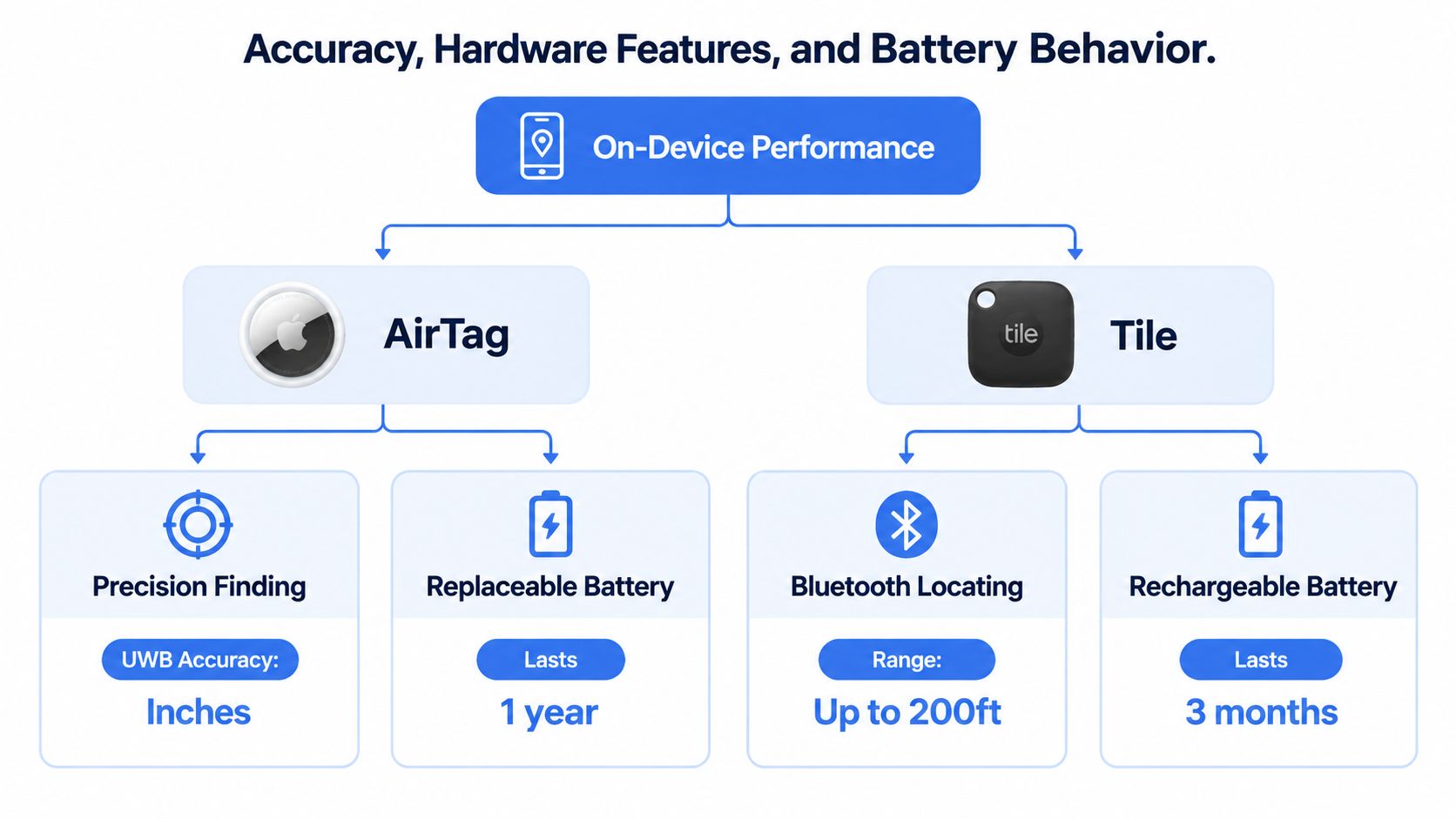
The performance hierarchy is straightforward:
- Remote recovery depends mainly on participating devices encountering the tracker.
- Nearby recovery depends on Bluetooth signal quality and the phone’s search guidance.
- Final pinpointing favors AirTag when the owner has supported Apple hardware.
- Deployment flexibility favors Tile when Android owners need direct access.
A Tile Mate Bluetooth tracker overview helps compare form factors and battery arrangements. The hardware decision remains conditional. AirTag offers the more precise close-range search within Apple’s ecosystem, while Tile presents fewer compatibility barriers for mixed-device groups.
Ecosystem Compatibility and Privacy Protections
AirTag and Tile solve different access problems. Tile supports iOS and Android, which makes it easier to deploy across a household, campus team, or company with mixed phones. AirTag setup and core tracking are designed around Apple devices, so its strongest features assume an Apple-centered environment.
That platform distinction affects more than convenience. It changes who can configure the tracker, who can perform close-range searches, and how much of the potential network is available to the owner. A mixed-device household may accept weaker unattended recovery potential in exchange for letting everyone participate directly.
Alerts are safeguards, not guarantees
Apple says AirTag and Find My use encrypted, anonymous reporting. Apple also says that an iPhone or Android phone can alert someone when an unknown AirTag appears to be traveling with them (Apple’s unwanted-tracker guidance).
The important limitation is timing. An alert generally depends on the unknown tracker moving with someone over time, the person having a compatible detection path, and the device remaining active and discoverable. A physical obstruction, disablement, or delayed encounter can affect when someone learns about it. Privacy engineering reduces unnecessary exposure of location data, but it doesn’t guarantee immediate prevention of misuse.
Tile requires a different verification question
Tile’s cross-platform access can help Android users participate in tracker ownership, but buyers should examine how its safety features behave under different modes. Recent comparison coverage highlights that Tile’s Scan and Secure process may not detect Tiles placed in Anti-Theft Mode. That means “does it have an unwanted-tracker feature?” is too broad a question.
Ask instead:
- Who receives the alert? The owner, a nearby person, or both?
- When does the alert appear? Immediately, or only after movement over time?
- What happens in Anti-Theft Mode? Verify whether scanning still works.
- Can the device be physically disabled? Understand the steps before relying on it.
- What data does the network expose? Separate owner privacy from bystander safety.
A live location-sharing service serves a different purpose from either tracker. Its role is to share a person’s current journey with selected contacts, not to locate an unattended object through anonymous Bluetooth relays. Neither AirTag nor Tile should be marketed as a personal-safety device just because it can trigger an unwanted-tracker alert.
Real-World Use Cases That Decide the Winner
The winner changes with the environment. A tracker used by an iPhone owner in a busy airport faces a different problem from one used by a mixed-device family on a rural trip.
Mixed-device households
Suppose one person uses an iPhone and another uses Android. Tile is easier to share as a household system because both platforms can configure and locate it. That advantage is real, but it doesn’t mean Tile will match AirTag’s unattended recovery performance. If the tagged bag is left in a crowded shopping district, AirTag may encounter far more participating devices. If the bag is sitting in a quiet neighborhood and no relevant app user passes by, neither product has a dependable live trail.
Airports and campuses
Airports, transit hubs, and college campuses are strong AirTag environments because they combine dense foot traffic with many potentially participating Apple devices. A checked bag can move through several populated areas before the owner reaches the baggage desk. The network can provide a useful location update even when the owner’s phone is nowhere near the item.
Tile still makes sense when an organization supplies mixed phones, uses Tile-specific workflows, or needs form factors outside AirTag’s single design. The decision is operational rather than ideological. A campus with Android-heavy users may value direct compatibility, while a travel program focused on unattended luggage may prioritize passive network reach.
Rural travel and sparse routes
Rural travel exposes the limits of both products. Bluetooth trackers don’t send their own GPS or cellular location, so a tracker in an isolated cabin, empty field, or lightly traveled road can wait for a compatible phone encounter. A larger potential network helps only when participating devices are nearby.
International travel adds another layer. Platform popularity and app participation can vary by location, and the lost item may cross between dense and sparse environments. The safe assumption is that neither tracker provides continuous coverage everywhere.
The contrarian conclusion: Cross-platform compatibility determines who can use Tile, but it doesn’t guarantee equivalent recovery coverage.
Use AirTag when the owner has supported Apple hardware and the item will spend time in dense Apple-heavy locations. Use Tile when Android access, household interoperability, or product shape matters more than maximum passive-network potential. For rural trips, attach either tracker as a recovery aid, not as a promise of live location.
Where Trackers Stop and Personal Safety Begins
A tracker attached to a person’s bag isn’t monitoring that person. It doesn’t stream what is happening, record an encounter, let a trusted contact watch a route in real time, or provide a human operator with context. Neither AirTag nor Tile supplies continuous live video, live audio, human monitoring, emergency escalation, or guaranteed location updates.
That distinction matters during a late-night walk, a rideshare journey, or a lone-worker shift. If someone needs help, knowing where a tagged object was last detected may be too old, too approximate, or attached to the wrong thing. An unwanted-tracker alert also protects a potential bystander from covert tracking. It doesn’t create a response channel for the owner.
Match the tool to the risk
- Lost keys or luggage: A Bluetooth tracker is appropriate for asset recovery.
- A late walk: Use a service that can share a live route and provide a way to request help.
- A rideshare concern: Live video, audio, location, and human review provide context a tracker cannot.
- Lone working: A check-in or escalation workflow is more relevant than a passive tag.
- An emergency involving another person: The system needs a way for someone else to trigger assistance and convey context.
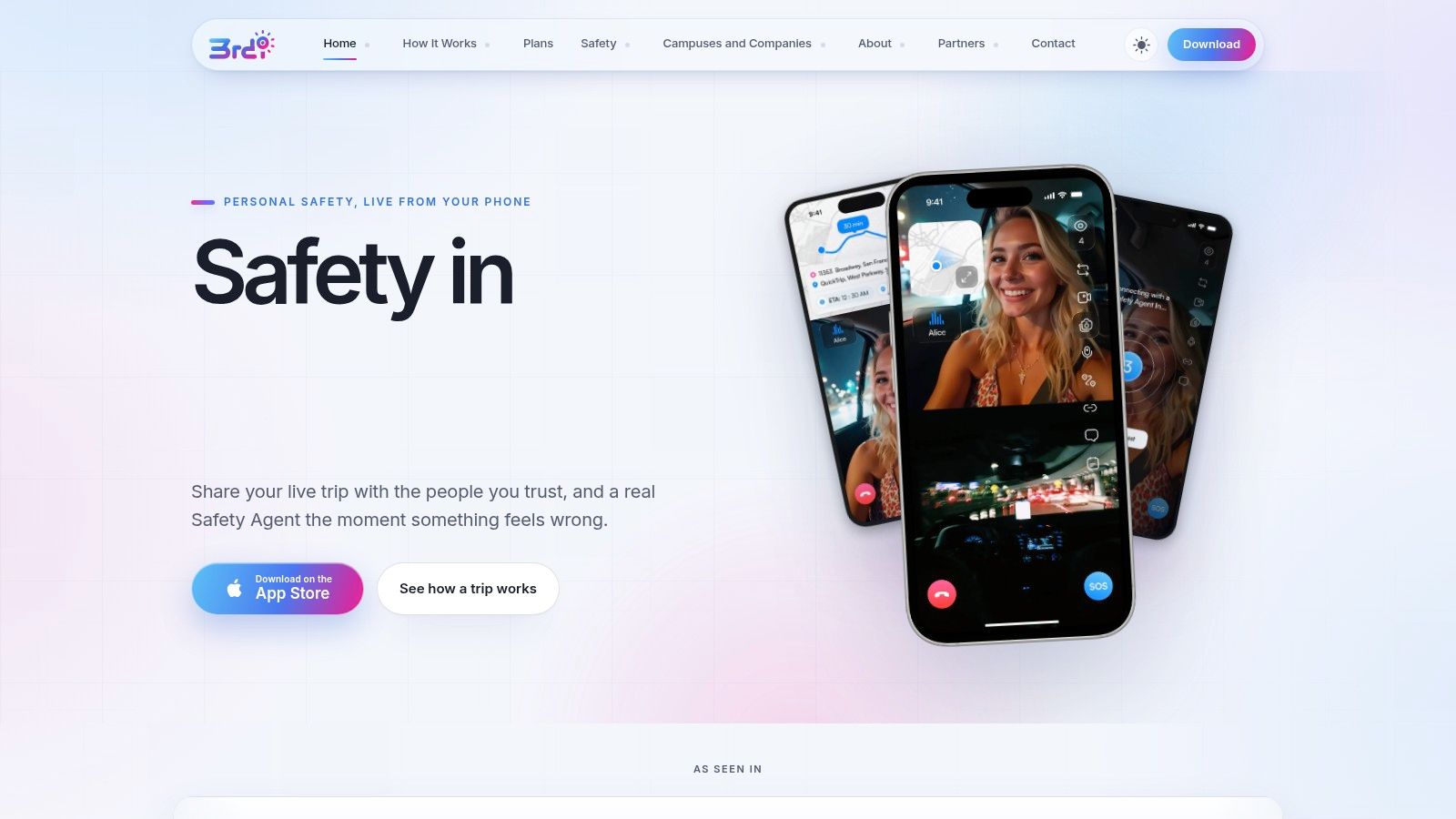
3rd-i offers an application that streams live video, audio, and location to selected contacts and trained Safety Agents, with Safety Agent escalation to 911 through RapidSOS. It also supports features such as live route sharing, SOS workflows, recording, and emergency assistance for another person. That is a separate category from Tile and AirTag, and it should be evaluated as live personal-safety monitoring rather than item recovery.
A tracker can complement a safety plan by helping locate a bag or phone. It cannot replace a service designed to observe a journey and escalate an emergency.
Recommendation and Common Questions
Choose AirTag if your household uses Apple devices and your belongings travel through airports, campuses, transit hubs, or dense cities. Choose Tile if Android compatibility, mixed-device ownership, or specialized form factors matters more. In rural settings, treat either product as a last-known-location aid, not continuous tracking.
Can either tracker guarantee recovery in the countryside? No. Sparse nearby-device encounters can leave updates stale.
Does Tile’s Anti-Theft Mode guarantee protection from misuse? No. Verify how Scan and Secure behaves in that mode before relying on it.
Can AirTag or Tile replace a personal-safety service? No. Neither provides live video, audio, human monitoring, or emergency escalation.
The one-line rule: AirTag generally wins on passive network potential and Apple-only precision. Tile wins when platform neutrality is the essential requirement.
3rd-i provides live video, audio, and location sharing with selected contacts and trained Safety Agents, plus emergency escalation through RapidSOS for situations where an item tracker isn’t enough. If your concern involves late walks, rideshares, campuses, or lone work, visit 3rd-i to evaluate a live personal-safety approach alongside your asset-recovery tools.